
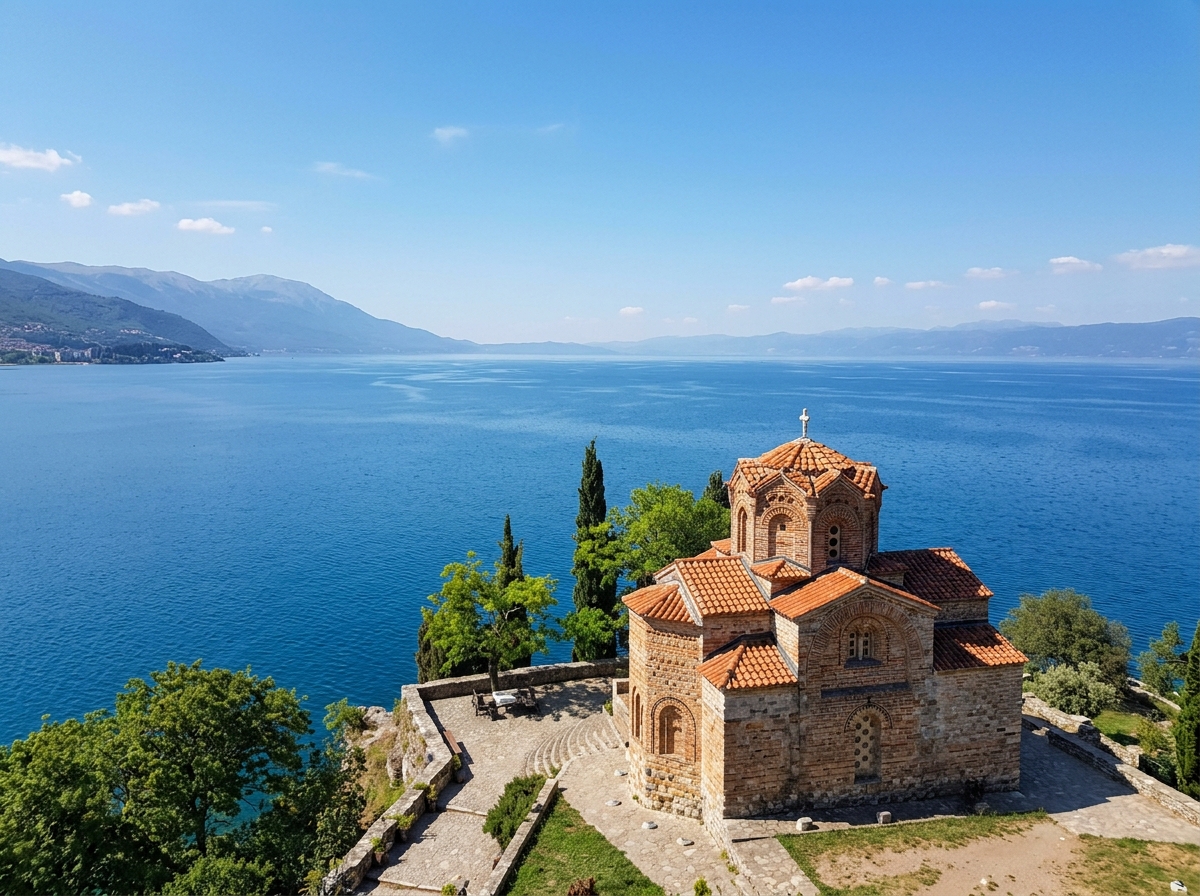
Ohrid, North Macedonia is much more than a beautiful lakeside destination. For travelers interested in history, Christianity, religious heritage and ancient churches, Ohrid offers a remarkable journey through more than 1,500 years of spiritual and cultural history.
Located on the shores of Lake Ohrid, one of Europe’s oldest lakes, the city was once known as Lychnidos and became an important center of Christianity during Late Antiquity. Archaeological excavations have revealed seven early Christian basilicas in the historic area of Ohrid, dating from the 4th, 5th and beginning of the 6th centuries.
Centuries later, Ohrid became one of the most important centers of Slavic Christianity and education in the Balkans. The arrival and work of St. Clement of Ohrid and St. Naum transformed the region into a major center of Christian teaching, writing and culture.
Today, visitors can explore medieval churches, monasteries, ancient basilicas, archaeological sites and religious landmarks scattered throughout Ohrid and around Lake Ohrid.
For travelers interested in religious tourism in North Macedonia, Ohrid is one of the country’s most important destinations.
Why Is Ohrid Important to Christianity?
The Christian history of Ohrid goes back much further than the famous medieval churches visible today.
The ancient city of Lychnidos developed into an important regional center during the Roman and Late Antique periods. Archaeological evidence shows that Christianity had already established a significant presence in the area by the 4th century.
UNESCO describes the Ohrid region as having an exceptional concentration of early Christian architecture, with basilicas dating from the 4th to the 6th centuries. Their mosaic floors and architectural remains provide evidence of the development of Christianity in the region during Late Antiquity.
This makes Ohrid particularly fascinating for religious travelers.
You are not simply visiting medieval churches.
You are walking through a landscape where Christian communities existed more than a thousand years ago.
Ohrid – A Center of Early Christian Heritage
The archaeological remains beneath and around modern Ohrid reveal a city with a long Christian tradition.
Several early Christian basilicas have been discovered in the old part of the city, including remains with impressive mosaic decorations.
The Christian heritage of the Ohrid region also extends beyond the city itself. UNESCO identifies the Early Christian church on the Lin Peninsula, on the western side of Lake Ohrid, as dating to the middle of the 6th century and notes architectural and decorative connections with the early basilicas of Ohrid.
For history and religious tourism enthusiasts, this makes the entire Lake Ohrid region a destination rather than just the city center.
The Arrival of St. Clement of Ohrid
One of the most important figures in Ohrid’s Christian history is St. Clement of Ohrid.
In the 9th century, Clement became one of the most influential disciples of the Slavic Christian mission associated with Saints Cyril and Methodius and their followers.
His work in Ohrid helped establish the city as a center of Christian education, Slavic literacy and religious culture.
At Plaošnik, visitors can see the site associated with St. Clement and the Church of Saints Clement and Panteleimon.
The local tourism authority describes the monastery at Plaošnik as the oldest Slavic monastery in Macedonia and connects the site with Clement’s educational and literary work.
For anyone interested in the history of Christianity in North Macedonia, Plaošnik is one of the most important places to visit in Ohrid.
Church of Saints Clement and Panteleimon at Plaošnik
Church of Saints Clement of Ohrid and Panteleimon
Located above the Old Town, Plaošnik is one of the spiritual and archaeological highlights of Ohrid.
The site combines archaeology, early Christian remains and the later medieval Christian tradition associated with St. Clement.
The present church stands on a site with earlier Christian structures, and archaeological research has revealed remains of an early Christian basilica beneath the complex.
St. Clement’s connection with the site gives it particular importance.
For religious travelers, Plaošnik is not simply another historic church. It represents the period when Ohrid developed into one of the most important centers of Slavic Christian culture.
The Church of St. Sophia – One of Ohrid’s Greatest Religious Landmarks
Church of Saint Sophia
The Church of St. Sophia is one of the most important medieval churches in Ohrid.
The present church was built over earlier Christian foundations and became an important ecclesiastical center. During the medieval period, St. Sophia served as the cathedral church of Ohrid’s major ecclesiastical institutions.
Inside, visitors can admire some of the most important medieval frescoes in the region.
UNESCO specifically highlights St. Sophia, together with St. John at Kaneo and the Church of the Holy Mother of God Perivleptos, as outstanding examples of Byzantine artistic achievement.
The church is therefore essential for anyone interested in:
- Byzantine Christianity
- Medieval Orthodox art
- Religious architecture
- Christian frescoes
- The history of the Ohrid Archbishopric
Church of the Holy Mother of God Perivleptos
Church of the Virgin Mary Peribleptos
Another essential stop on an Ohrid religious heritage tour is the Church of the Holy Mother of God Perivleptos.
Built in the 13th century, the church became particularly important after Ottoman rule transformed the religious landscape of the city.
According to the Ohrid tourism authority, the relics of St. Clement were transferred here, and the church became an important gathering place for worshippers.
The church is also significant for its architecture and artistic heritage.
Its frescoes are among the great examples of medieval painting associated with Ohrid’s artistic tradition.
St. John at Kaneo – The Most Famous Church in Ohrid
Church of Saint Jovan the Theologian at Kaneo
If you have seen a photograph of Ohrid, there is a good chance it included St. John at Kaneo.
Perched dramatically above Lake Ohrid, the small medieval church has become one of the symbols of North Macedonia.
The church’s position above the lake makes it particularly memorable, but its significance is not only visual.
It forms part of Ohrid’s extraordinary collection of medieval religious architecture and contributes to the city’s status as a major center of Byzantine Christian heritage.
The walk to Kaneo is also part of the experience.
From the Old Town, visitors can follow narrow streets and a lakeside path toward the church.
The view across Lake Ohrid is one of the most beautiful in North Macedonia.
St. Naum Monastery – A Spiritual Journey Along Lake Ohrid
Saint Naum Monastery
No religious journey through the Ohrid region would be complete without visiting St. Naum Monastery.
Located approximately 29 kilometers south of Ohrid, near the Albanian border, the monastery occupies one of the most spectacular locations on Lake Ohrid.
St. Naum was a disciple of the Slavic Christian mission and an important contemporary of St. Clement of Ohrid.
The monastery is associated with his life, teaching and burial.
Inside the church, visitors can see centuries of religious art and frescoes, while outside the monastery complex offers views toward the lake and the famous springs of the Black Drim.
This is also where renting a car in Ohrid becomes particularly useful.
Why You Should Rent a Car to Explore Ohrid’s Religious Heritage
Many of Ohrid’s most important churches can easily be visited on foot.
The Old Town, St. Sophia, Plaošnik, Perivleptos and St. John at Kaneo can be combined into a walking tour.
However, some of the most interesting religious sites are located outside the center.
If your goal is to experience religious tourism around Lake Ohrid, a rental car gives you much more freedom.
With a car, you can visit:
- St. Naum Monastery
- The springs of the Black Drim
- Bay of Bones
- Trpejca
- The Church of the Holy Mother of God Zaum
- Lakeside monasteries and churches
- Galičica National Park
- Villages around Lake Ohrid
- Religious and cultural sites outside the Old Town
The road south from Ohrid toward St. Naum follows the eastern shore of Lake Ohrid and provides access to several attractions along the way.
Instead of depending on fixed tours or public transportation, renting a car allows religious travelers to create their own itinerary.
Explore Ohrid With GoGo Rent a Car
For travelers planning a religious tour of Ohrid and Lake Ohrid, GoGo Rent a Car is an excellent local option.
GoGo Rent a Car
With a rental car from GoGo, you can start your journey in Ohrid and explore the city’s religious landmarks before continuing toward the monasteries and churches around the lake.
A car is especially convenient for travelers arriving at Ohrid St. Paul the Apostle Airport, allowing you to collect your vehicle and begin exploring North Macedonia without wasting valuable travel time.
Whether you are planning a short religious pilgrimage, a cultural holiday or a longer road trip through North Macedonia, flexible car rental makes it easier to visit multiple locations in one journey.
Book your GoGo rental car in Ohrid and explore the spiritual heritage of Lake Ohrid at your own pace.
The Church of the Holy Mother of God Zaum
Church Holy Mother of God Zaumska
For travelers who want to go beyond the famous landmarks, the Church of the Holy Mother of God Zaum near Trpejca is a fascinating addition to an Ohrid religious itinerary.
The church is located on the eastern shore of Lake Ohrid and dates to the 14th century.
Its lakeside location makes the journey especially memorable.
Because of its location outside the main tourist center, visiting Zaum is much easier with a private vehicle or organized excursion.
This is another reason why renting a car in Ohrid can transform a standard city break into a deeper exploration of the region’s religious heritage.
The 365 Churches of Ohrid
One of the most famous traditions associated with Ohrid is the story that the city once had 365 churches – one for every day of the year.
The number is often presented as a symbol of the extraordinary concentration of religious buildings in the city rather than a precise historical count.
The Ohrid tourism authority notes that the municipality today contains more than 100 Orthodox churches, alongside other religious buildings.
Whether or not you count exactly 365 churches, the underlying idea explains why Ohrid has long been associated with religious heritage.
Walking through the Old Town, it is common to encounter churches, chapels, monasteries and archaeological remains within a relatively small area.
Ohrid – The Jerusalem of the Balkans
Ohrid is sometimes described as the “Jerusalem of the Balkans” because of its extraordinary concentration of churches and religious heritage.
The comparison should be understood as a nickname rather than an official designation.
What makes the comparison understandable is the sheer depth of Ohrid’s sacred history.
Early Christian basilicas.
Byzantine churches.
Medieval monasteries.
Frescoes.
Icons.
Relics.
Slavic Christian literature.
And centuries of continuous religious tradition.
UNESCO recognizes the Ohrid region for the exceptional combination of its cultural, spiritual and natural heritage. The World Heritage property includes religious architecture dating from the 7th to the 19th centuries, while the archaeological record demonstrates an even earlier Christian presence.
A Perfect Religious Tourism Itinerary in Ohrid
If you are visiting Ohrid specifically for its Christian heritage, you can organize your trip around several major locations.
Day 1 – Historic Christian Ohrid
Start in the Old Town and visit:
- Church of St. Sophia
- Church of the Holy Mother of God Perivleptos
- Ancient Theatre
- Plaošnik
- Church of Saints Clement and Panteleimon
- Samuel’s Fortress
- St. John at Kaneo
Spend the evening beside Lake Ohrid.
Day 2 – St. Naum and the Eastern Shore
Rent a car and drive south along Lake Ohrid.
Visit:
- Bay of Bones
- St. Naum Monastery
- Springs of the Black Drim
- Lakeside churches and viewpoints
- Return to Ohrid along the scenic lake road
This is one of the best days for combining religious tourism and nature tourism in North Macedonia.
Day 3 – Discover the Lesser-Known Sacred Sites
Use your rental car to explore locations outside the main tourist center.
Consider visiting:
- Trpejca
- Church of the Holy Mother of God Zaum
- Lakeside villages
- Additional monasteries and churches around Lake Ohrid
This allows you to experience a quieter side of Ohrid’s religious heritage.
Why Ohrid Is Perfect for Religious Tourism
Ohrid offers something unusual for religious travelers.
You don’t have to choose between history and nature.
You can visit a medieval church in the morning, explore an ancient archaeological site at lunchtime, swim in Lake Ohrid in the afternoon and visit a centuries-old monastery before sunset.
The city’s compact Old Town makes many important churches accessible on foot, while a rental car opens up the wider region.
For travelers coming specifically to discover Christian heritage in North Macedonia, this combination makes Ohrid one of the most rewarding destinations in the Balkans.
Plan Your Christian Heritage Tour of Ohrid
A trip to Ohrid can be much more than a summer holiday.
It can become a journey through the history of Christianity in the Balkans.
From the early Christian basilicas of ancient Lychnidos to the Byzantine churches of the medieval period and the work of St. Clement and St. Naum, Ohrid preserves an extraordinary religious legacy.
Explore Plaošnik.
Stand beneath the frescoes of St. Sophia.
Walk to St. John at Kaneo.
Visit the relics and traditions associated with St. Clement.
Drive along Lake Ohrid to St. Naum.
Discover the quieter churches around the lake.
And experience the spiritual heritage of one of Europe’s oldest cultural landscapes.
When exploring Ohrid and the surrounding monasteries, rent a car with GoGo and discover North Macedonia’s Christian heritage at your own pace.
Frequently Asked Questions About Religious Tourism in Ohrid
Why is Ohrid important to Christianity?
Ohrid has Christian archaeological remains dating back to Late Antiquity, including basilicas from the 4th, 5th and early 6th centuries. It later became a major center of Slavic Christianity, education and culture through St. Clement and St. Naum.
What are the most important churches in Ohrid?
Some of the most important churches include St. Sophia, St. John at Kaneo, the Church of the Holy Mother of God Perivleptos and the Church of Saints Clement and Panteleimon at Plaošnik.
Where can I learn about St. Clement of Ohrid?
Plaošnik is one of the most important places associated with St. Clement. The site contains the Church of Saints Clement and Panteleimon and archaeological remains connected with earlier Christian structures.
Is St. Naum worth visiting?
Absolutely. St. Naum Monastery combines religious heritage, Byzantine art, the tomb of St. Naum and the natural beauty of the springs of the Black Drim on the southern shore of Lake Ohrid.
Do I need a car to visit Ohrid churches?
You do not need a car for the main churches in Ohrid Old Town. However, renting a car is highly recommended if you want to visit St. Naum, Zaum, Trpejca and other religious sites around Lake Ohrid.
What is the best way to explore religious sites around Lake Ohrid?
A rental car gives you the greatest flexibility. You can combine several churches, monasteries, archaeological sites and viewpoints in a single day without depending on fixed public transport schedules.
Why choose GoGo Rent a Car in Ohrid?
GoGo offers a convenient local option for travelers who want to explore Ohrid and the wider Lake Ohrid region by car. A rental vehicle is particularly useful for reaching attractions outside the Old Town, including St. Naum and lakeside religious sites.
Final Thoughts
Ohrid is one of the most fascinating destinations in North Macedonia for religious tourism.
Its churches and monasteries tell a story that stretches from the early Christian centuries through the Byzantine era and into the development of Slavic Christianity.
But the experience goes beyond the buildings.
It is found in the frescoes, archaeological remains, mountain landscapes, lake views and centuries-old traditions that continue to define the region.
If you are planning a Christian heritage tour in Ohrid, give yourself enough time to explore both the historic center and the wider Lake Ohrid region.
And when you are ready to go beyond the Old Town, rent a car with GoGo and discover the churches, monasteries and spiritual heritage of Ohrid and North Macedonia at your own pace.